Grey muzzles: caring for your senior dog well
Dogs age faster than we notice. The changes that are normal, the ones that are disease, and how to keep old dogs comfortable.

Somewhere around seven years for most dogs, earlier for giants, later for toys, your dog quietly becomes a senior. Nothing announces it. The walks just get slower, the naps longer, the muzzle greyer. Good senior care is about noticing, and about refusing to write off treatable disease as "just old age".
Normal ageing
Slower movement, more sleep, a little cloudiness in the eyes (lenticular sclerosis, usually harmless), greying fur, more selective hearing. These are the soft edges of age.
Not normal, at any age
- Drinking and urinating much more than before (kidneys, diabetes)
- Sudden weight loss, or gain with a pot belly
- Coughing at night or tiring on gentle walks (heart)
- Stiffness that improves after "warming up" (arthritis, which is painful and treatable)
- Lumps that grow, bleed or change
- Confusion: getting stuck in corners, forgetting routines, night pacing
Every one of those has management or treatment. "He is just old" has buried more treatable dogs than any disease.
Practical comfort at home
Raise food and water bowls for stiff necks. Provide thick bedding away from cold, hard floors. Keep walks shorter but regular; motion is medicine for arthritic joints, and weight control is the single kindest thing for them, because every extra kilo lands on sore joints. Senior-formula food supports ageing kidneys and joints, and omega-3 supplements have honest evidence behind them.
Twice-yearly checks
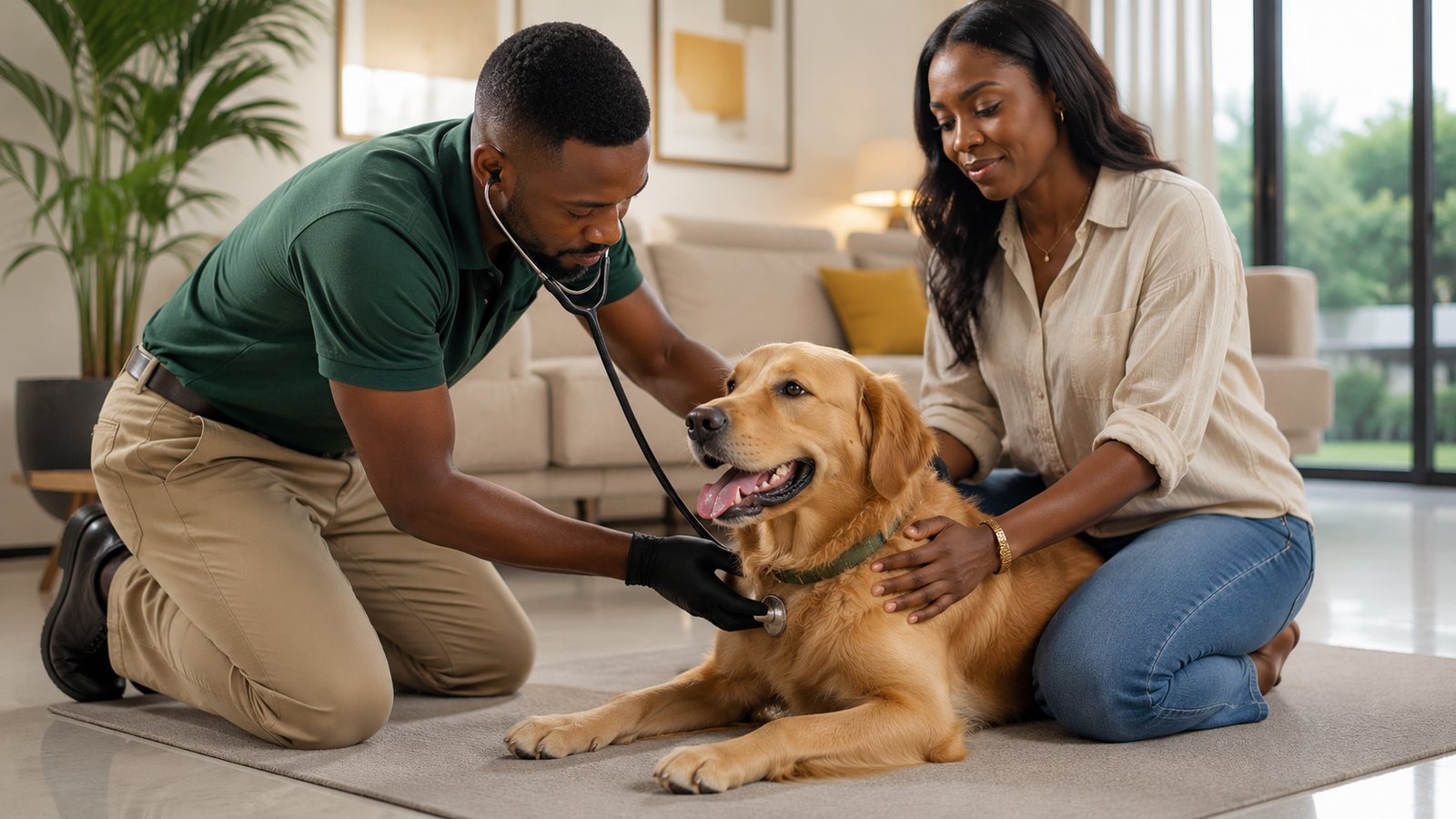
Dog years move fast at the senior end; a yearly exam is like a human seeing a doctor every seven years. We recommend six-monthly checks with basic bloodwork for seniors, which is exactly the rhythm a Care Plan automates. Old dogs particularly hate clinic trips, which makes senior care the strongest case for the home visit there is.
Seeing these signs at home?
Don't sit on symptoms. A licensed vet can examine your pet at home, often within days.