That honking cough: kennel cough explained
A goose-honk cough after boarding or a new dog's arrival is usually kennel cough. What it is, how it spreads, and when it turns serious.

If your dog develops a dry, honking cough, like something is stuck in its throat, a few days after boarding, a grooming visit, or a new dog joining the compound, you are probably looking at kennel cough.
What it is
Kennel cough is an infectious cough complex, a mix of bacteria and viruses that inflame the windpipe. It spreads through the air and shared bowls wherever dogs gather, which is why boarding, breeding compounds and estate dog gatherings are the usual sources. It is the canine version of a heavy chest cold: miserable, noisy, and usually self-limiting.
What it looks like
A dry hacking or honking cough, often ending in a retch that owners mistake for vomiting. Triggered by excitement, pulling on the leash, or pressure on the throat. Most dogs otherwise remain bright: eating, playing, tail up. That brightness is the reassuring sign.
Home care while it runs its course
Rest the dog for a week or two: no strenuous play, and swap the collar for a harness so nothing presses the windpipe. Keep water always available and food soft if the throat seems sore. Keep the coughing dog away from other dogs; it is contagious for weeks.
When it is more than kennel cough
See a vet promptly if the dog goes off food, becomes lethargic, breathes fast or with effort, runs a fever, or the cough turns wet and productive. In puppies, seniors and short-nosed breeds, kennel cough can descend into pneumonia, and that is a different, urgent conversation. A persistent cough in an unvaccinated dog also raises the distemper question, which nobody wants to miss.
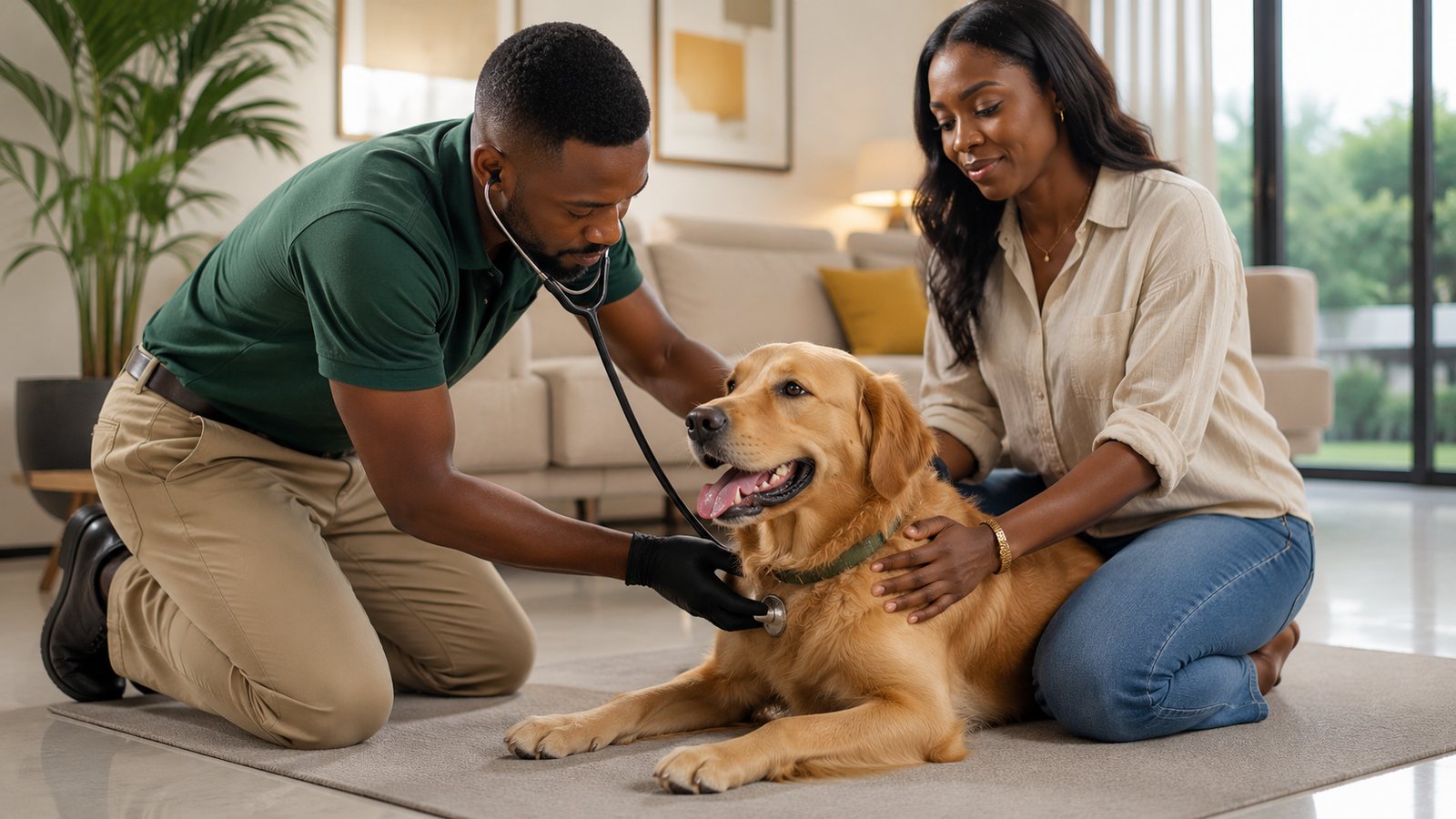
If the cough is more than mild or your dog is very young or old, book a home visit; examining a coughing dog at home also avoids a waiting room full of dogs to infect.
Seeing these signs at home?
Don't sit on symptoms. A licensed vet can examine your pet at home, often within days.