New pet, old pets: introductions that do not end in war
First impressions between animals are hard to undo. The scent-first method for dogs and cats, and the mistakes that start feuds.

The worst way to introduce two animals is the most common one: carry the new pet in, put it on the floor, and hope. First meetings set patterns that can last years, so it pays to spend a week doing it properly.
The principle: scent before sight
Animals meet through their noses long before their eyes. Let them learn each other's smell while separated and the eventual face-to-face is a formality instead of an ambush.
Introducing a new cat to a resident cat
Give the newcomer its own room with food, water and litter. For several days, swap bedding between the two cats daily, and feed them on opposite sides of the closed door so each associates the other's smell with something good. Then crack the door for visual contact over a few sessions. Hissing is normal; flat-out attack means slow down. Full sharing usually lands within one to three weeks. Two litter boxes plus one, always.
Introducing a new dog to a resident dog
Neutral ground first: meet on a walk outside the compound, both on loose leashes, walking parallel rather than head-on. Head-on approaches read as confrontation in dog language. After a calm walk together, enter the home together, with the resident dog going first. Remove toys and food bowls for the first days; those are the flashpoints. Feed separately until peace is proven.
Dog meets cat
Leash the dog and let the cat control the distance, with escape routes and high perches available. Reward the dog for calm attention. Never let a dog chase a cat "just once to get it out of the system"; that once writes the script.
When to get help
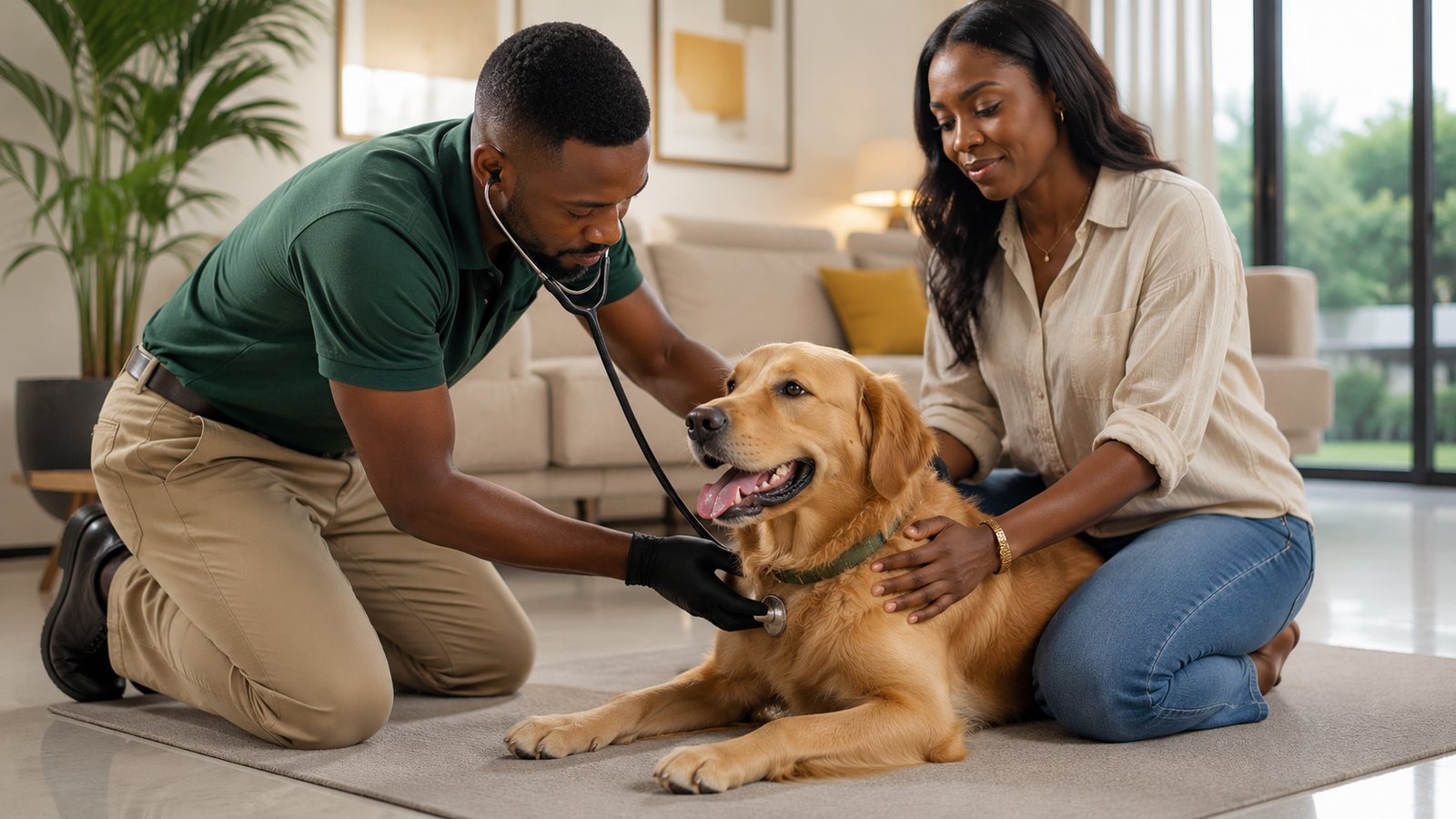
Bites that break skin, sustained stalking, or a resident pet that stops eating deserve professional input; sometimes stress illness hides underneath. A home visit around a new arrival is also the perfect moment for the newcomer's health check, before it shares parasites along with the sofa.
Make home work for your pet
From behaviour puzzles to compound treatments, most home problems have a house call answer.