The itchy dog: allergies, and why it is usually not the food
Constant scratching without parasites often means allergy. Flea saliva, environment and diet, in the order vets actually suspect them.

An itchy dog with no fleas in sight is one of the most frustrating things an owner can live with, and one of the most common puzzles we solve. Allergies are usually the answer, and the order of suspects surprises people.
Suspect one: flea saliva
Flea allergy dermatitis is the most common allergy in dogs, and here is the trap: an allergic dog reacts to a single flea bite, so "but I never see fleas on him" proves nothing. The classic pattern is intense itching and hair loss over the rump and tail base. The test is simple: rigorous, uninterrupted flea control on the dog and its environment for six to eight weeks. Many "mystery" itches end right there.
Suspect two: the environment
Pollens, moulds, dust mites and grasses cause atopic dermatitis: itchy face, paws, armpits and belly, often licked reddish-brown. It commonly flares seasonally, worse in humid months. Management is realistic rather than curative: medicated shampoos, paw wipes after outdoor time, omega-3 support for the skin barrier, and modern anti-itch medications from your vet when flares are cruel.
Suspect three, not one: food
Food allergy is real but genuinely less common than social media suggests, and it is usually a protein (chicken, beef) rather than "grain". The only valid test is a strict elimination diet for eight weeks, a single novel protein and nothing else. No treats, no table scraps, no cheating; one Sunday chicken bone resets the clock.
Meanwhile, break the scratch cycle
Scratching damages skin, damaged skin gets infected, infection itches more. If the skin is already red, smelly or oozing, that infection needs treatment alongside the allergy hunt.
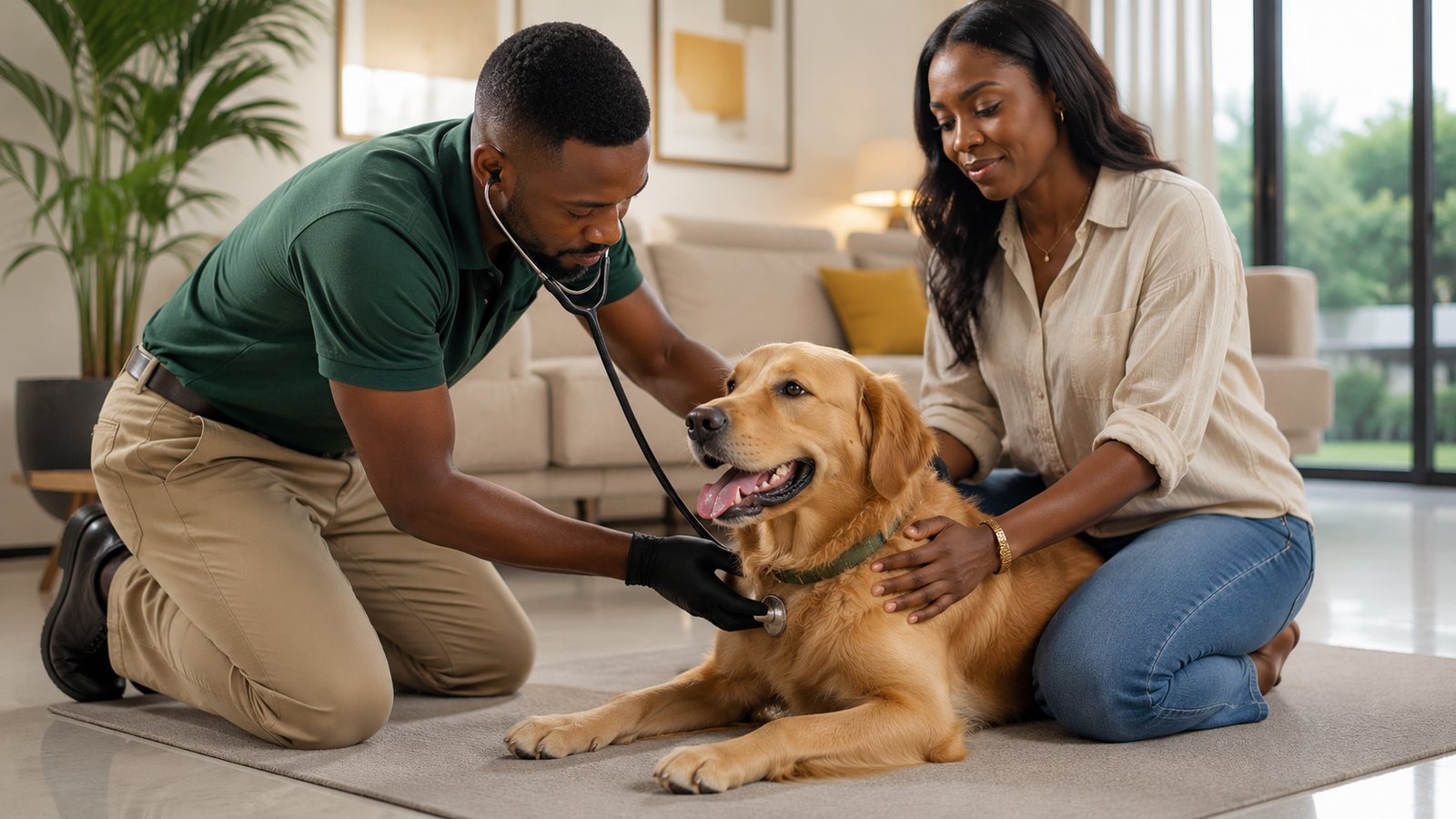
Persistent itching is a diagnosis to make, not a shampoo to buy. Book a home visit and we will work the list properly; flea control and skin-support supplements are in the Pet Shop when you know what you are fighting.
Seeing these signs at home?
Don't sit on symptoms. A licensed vet can examine your pet at home, often within days.