Head shaking and smelly ears: dog ear infections in the rainy season
Humidity turns floppy ears into incubators. How to spot an infection early, clean ears properly, and when drops are not enough.
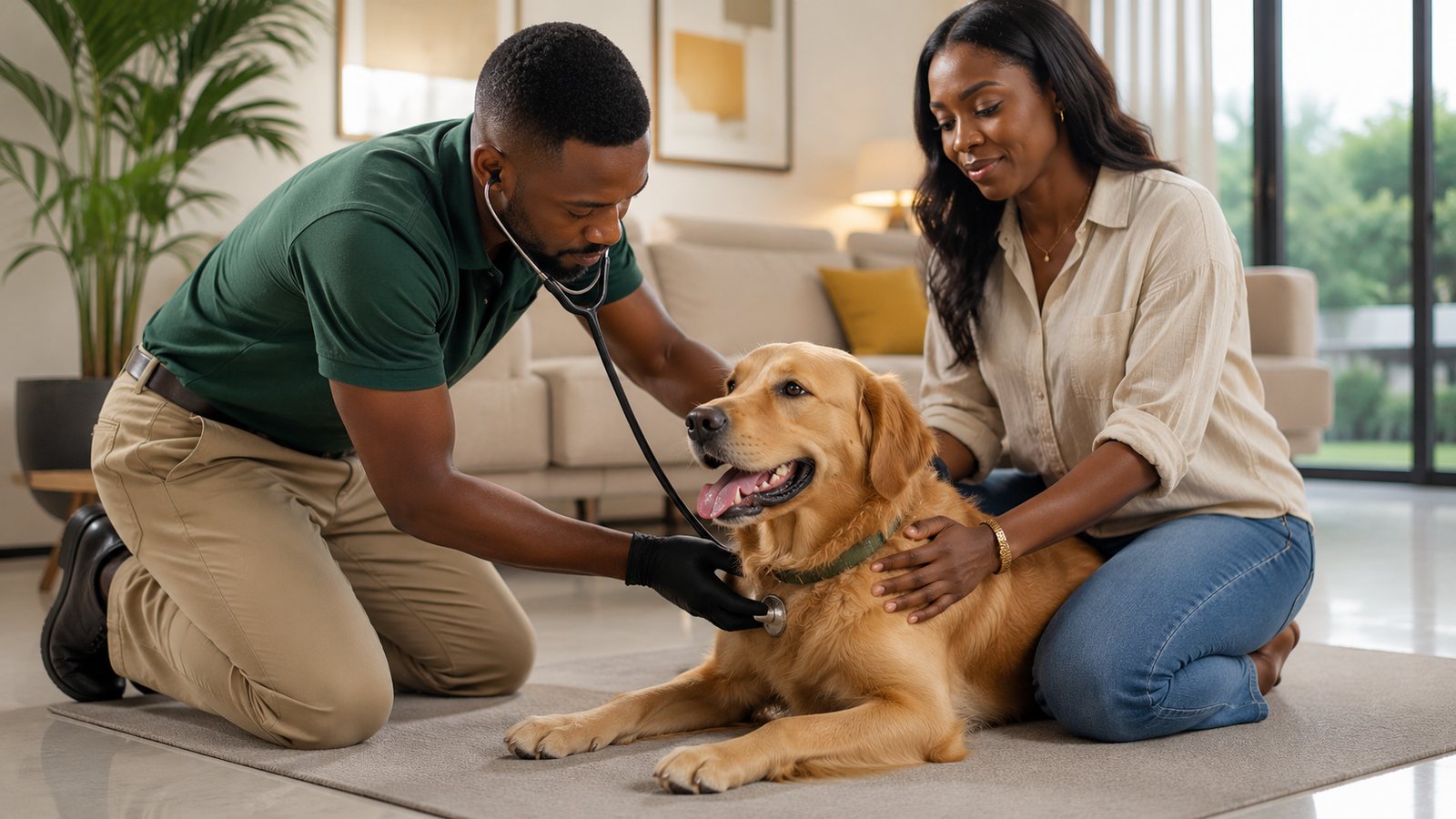
Every rainy season, the same patient walks into our week again and again: a dog shaking its head, scratching one ear, with a smell you notice from a metre away. Ear infections thrive in Lagos humidity, and floppy-eared breeds get the worst of it.
The early signs
Head shaking is usually first. Then scratching at the ear, a yeasty or foul smell, redness inside the flap, dark discharge, and in painful cases a head tilt or crying when the ear is touched. Dogs rarely fake ear discomfort; if the head is shaking, something is wrong in there.
Why the rainy season is worse
An ear canal is warm and dark by design. Add trapped moisture from rain, humid air and enthusiastic baths, and yeast and bacteria get everything they need. Breeds with heavy hanging ears, spaniels, retrievers, many local mixes, trap the most moisture.
What you can do at home
A weekly look and sniff inside both ears takes ten seconds and catches most problems early. Clean with a proper veterinary ear solution: fill the canal, massage the base until it squelches, let the dog shake, then wipe what surfaces with cotton wool. Never push cotton buds down the canal; they compact debris deeper and can injure the eardrum. After rain or baths, dry the ear flaps.
When home care is not enough
If there is already discharge, strong smell, pain or a head tilt, cleaning alone will not fix it; the dog likely needs prescription drops matched to what is actually growing in there, and sometimes the eardrum must be checked before anything is poured in. That examination matters: the wrong drops into a ruptured eardrum cause real damage.
Ear cleaning solution is in our Pet Shop, and an ear check rides along free with any home visit if you mention it when booking.
Seeing these signs at home?
Don't sit on symptoms. A licensed vet can examine your pet at home, often within days.